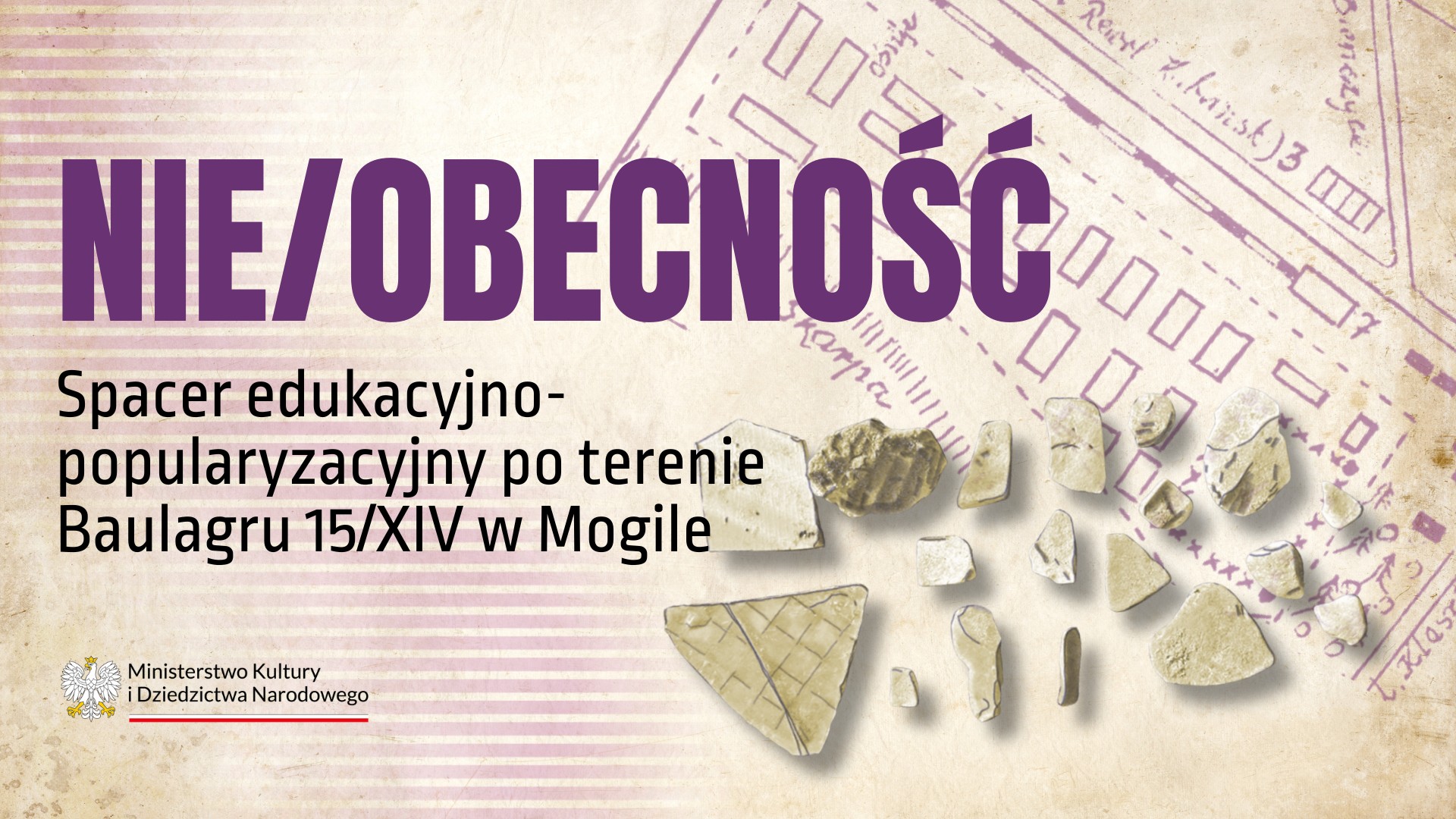
We invite you to the premiere of Non/Presence, a sound walk dedicated to the former Baulager 15/XIV site in Mogiła (now part of Nowa Huta) and to its presence—or absence—in collective memory.
The project was inspired by the long-standing efforts of the local community to commemorate the history of the construction depot that operated here during the Second World War, as well as the people who worked there: Soviet prisoners of war, Jewish male and female prisoners from Poland and Hungary, Polish forced labourers, and non-Jewish Polish prisoners from KL Plaszow.
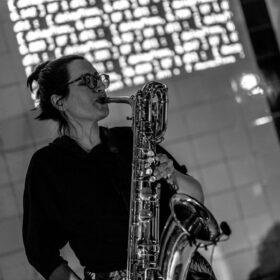
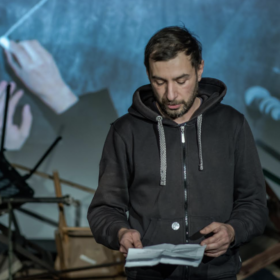
The walk – created in collaboration with artist Ludomir Franczak, saxophonist Paulina Owczarek and residents of Nowa Huta – will serve as a permanent, digital and publicly accessible form of commemoration.
Following the premiere presentation of the walk, we invite you to an informal conversation about the project, sound-based forms of commemoration and forgotten aspects of Nowa Huta’s history.
Event schedule:
11:00 AM — Meeting in front of Green Caffè Nero at Plac Centralny, Osiedle Centrum C 1, 31-929 Kraków, followed by an introduction
11:15 AM–12:00 PM — Walking part of the route together or individually
12:15 PM — Informal conversation with the people involved in creating the sound walk and commemorating local history
Please download the free Echoes.xyz app to your phone in advance and bring a pair of headphones.
Please note: Due to the multisensory nature of the experience, we recommend remaining particularly cautious and aware of your surroundings while using the Echoes.xyz app—especially near pedestrian crossings, busy streets and intersections.
Artists

Funding
Co-financed by the Ministry of Culture and National Heritage from the Culture Promotion Fund - a state special-purpose fund.